Jason Asano's Affliction Build, and the Party That Makes It Work
Quick answer: Jason Asano's affliction build in He Who Fights With Monsters barely deals direct damage — it stacks curses and afflictions that compound over time, so it pays out only if the fight lasts. In a system with no respecs, party composition is the only build freedom left: Sophie Wexler buys the engine its seconds, Humphrey Geller buys them with his body, and Colin turns its curse magic into healing. The party is the build.
Every build guide for He Who Fights With Monsters starts in the wrong place: with Jason. His essences. His confluence. His twenty abilities. An affliction engine so self-feeding that fans look up his actual character sheet like it's a raid boss's loot table. But Jason Asano's affliction build, alone, is a machine for dying interestingly. What makes it a weapon is the three people standing around it — because in a system where your soul writes your powers, there are no respecs. The only build choice you fully control is your party. The party is the build.
A Soul You Can't Edit
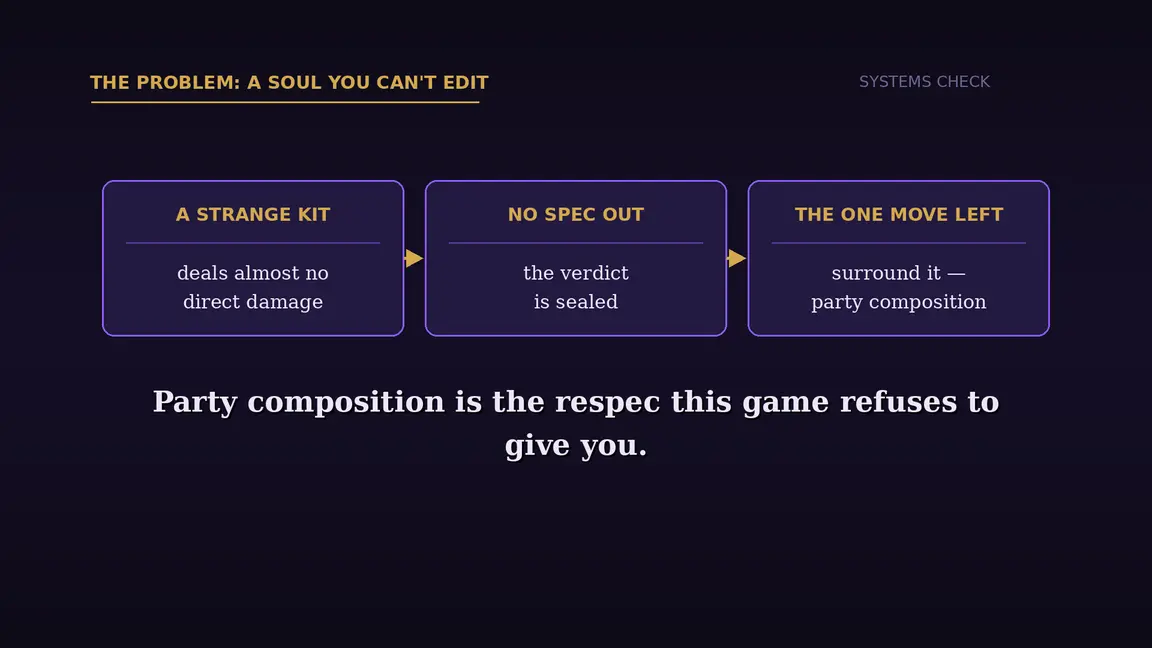
Set the constraint first, because everything follows from it. You bond three essences, and the reaction writes a fourth from who you are — the confluence essence, covered in depth in the confluence essence, explained. And it is permanent. Awakening stones answer inside their theme, and there are no rerolls. Which means a solo build in this system is a sealed verdict: twenty closed hands, fixed forever. If your soul deals you a strange kit, you cannot spec out of it.
Say it is an affliction kit that deals almost no direct damage. You can only do the one thing the system still leaves open: surround it. Party composition is the respec this game refuses to give you — performed socially instead of mechanically.
The quotable fact: in He Who Fights With Monsters, a bonded build is permanent — three chosen essences, a confluence written by reaction, and no respecs or rerolls — so party composition is the only build freedom the system leaves open.
The Engine: Jason's Affliction Build
Meet the engine the party has to serve. Jason's confluence is Doom — Dark, Blood, and Sin — and his kit is the famous affliction build. Jason barely hits things. Instead he stacks punishments: curses and afflictions that layer on a target, feed each other, and compound. His signature application grows, rank by rank, from a simple affliction into a multi-effect curse engine.
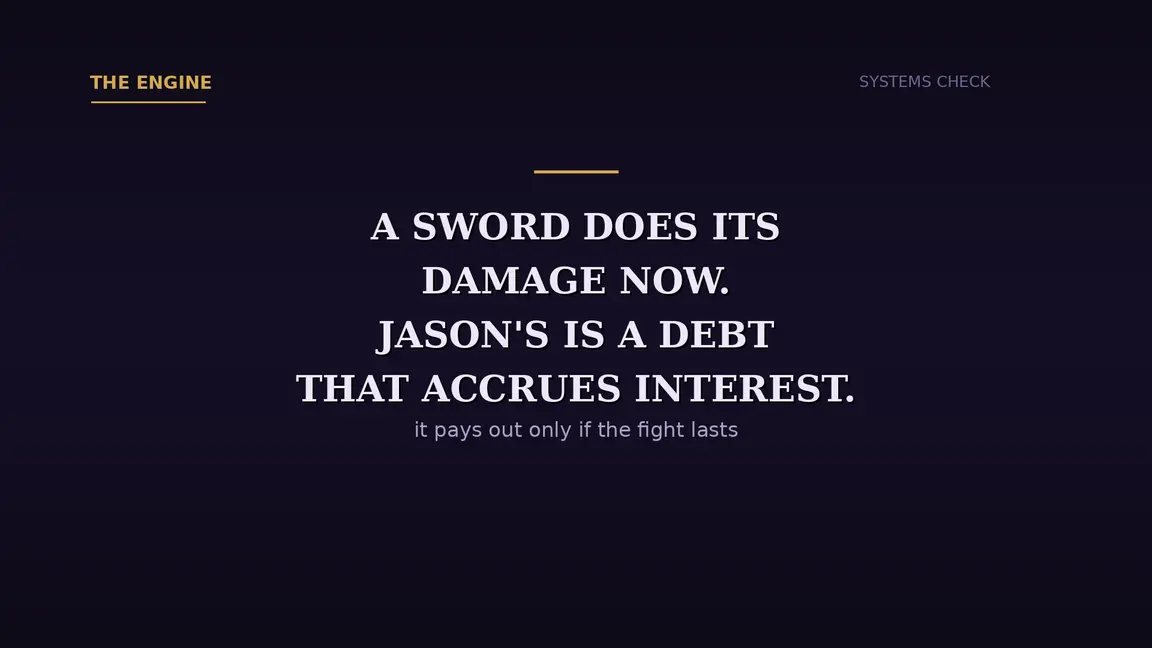
The math of it is the opposite of a sword. A sword does its damage now. Jason's damage is a debt that accrues interest — and it pays out only if the fight lasts. Which creates the build's fatal requirement: somebody has to make the fight last. An affliction engine, alone, is a man politely asking monsters to die later. It needs time — and time, in a fight, is bought by other people.
The quotable fact: Jason Asano's affliction build deals almost no direct damage — it stacks compounding curses and afflictions whose damage pays out only if the fight lasts long enough.
The Sheet Fans Look Up
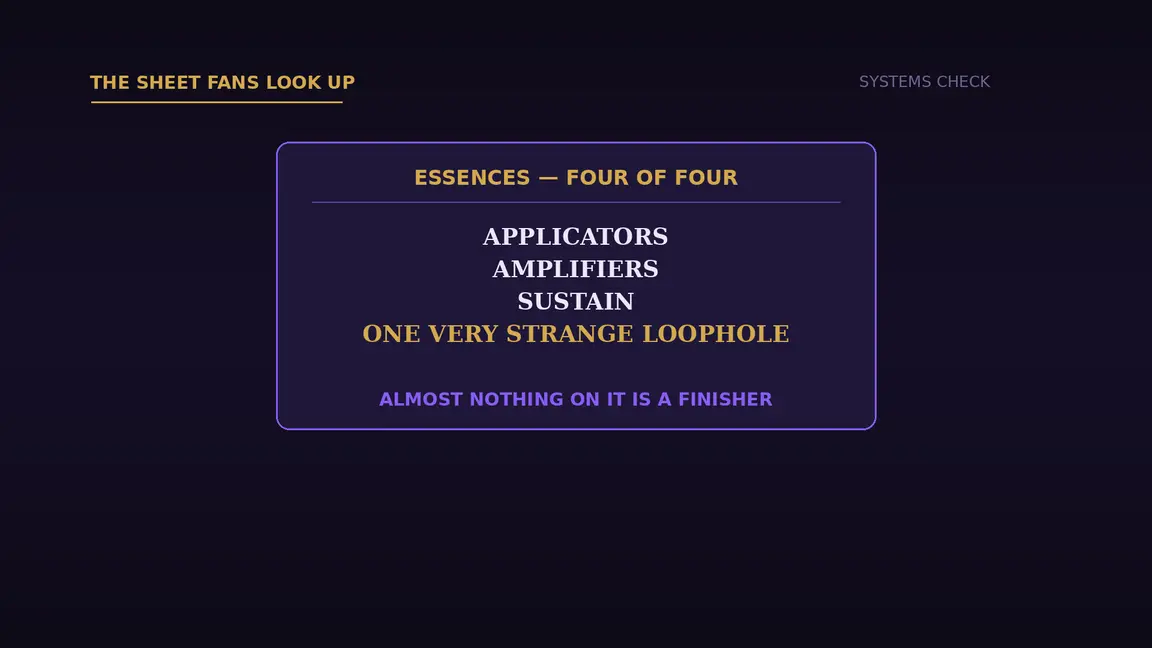
This is why the fandom treats Jason's character sheet as a document worth studying. Essences, four of four. Abilities tracked with progress percentages. The whole kit laid out like a raid build. Read properly, the sheet tells a story no single ability can: almost nothing on it is a finisher. It is applicators, amplifiers, sustain, and one very strange loophole this article reaches below.
A kit designed — whether Jason knew it or not — to be the center of a formation rather than a duelist. Most protagonists' sheets answer the question: how does he win? Jason's answers a better one: how does everyone around him become more dangerous? That is not a main-character build. That is a raid leader's. The formation it anchors:
| Role | Who | What they contribute |
|---|---|---|
| The engine | Jason Asano | Stacking afflictions that compound over time |
| The tempo | Sophie Wexler | Speed and control — she manufactures the seconds the engine needs |
| The wall | Humphrey Geller | The frontline the fight breaks against — he makes "later" a threat |
| The wildcard | Colin | Zone denial, disruption, and the polarity loophole that heals the party |
The quotable fact: Jason Asano's character sheet is built from applicators, amplifiers, and sustain rather than finishers — a kit made to be the center of a formation, not a duelist.
The Tempo: Sophie
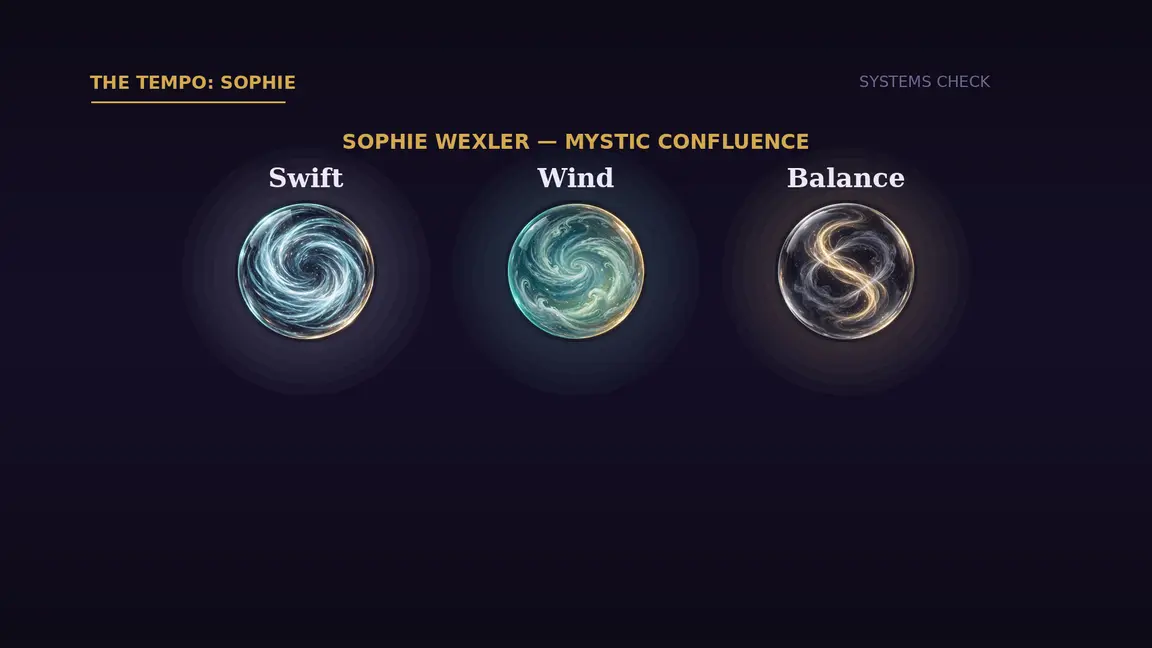
Enter the tempo. Sophie Wexler — Mystic confluence, from Swift, Wind, and Balance — is speed and control. She decides where the fight happens, how fast it moves, and who is standing in the wrong place when it arrives. For an affliction engine, that is life support disguised as elegance.
Jason's curses need seconds to stack; Sophie manufactures seconds — repositioning enemies into the engine's reach, keeping the wrong targets off the wrong people. She turns a brawl into a geometry problem with one correct answer. Every control player in every game knows this job: you do not top the damage chart, you decide whether there is a damage chart. Sophie is the reason Jason's debt-collecting gets to come due.
The quotable fact: Sophie Wexler's Mystic confluence (Swift, Wind, and Balance) makes her the party's tempo — her control manufactures the seconds Jason Asano's afflictions need to stack.
The Wall: Humphrey
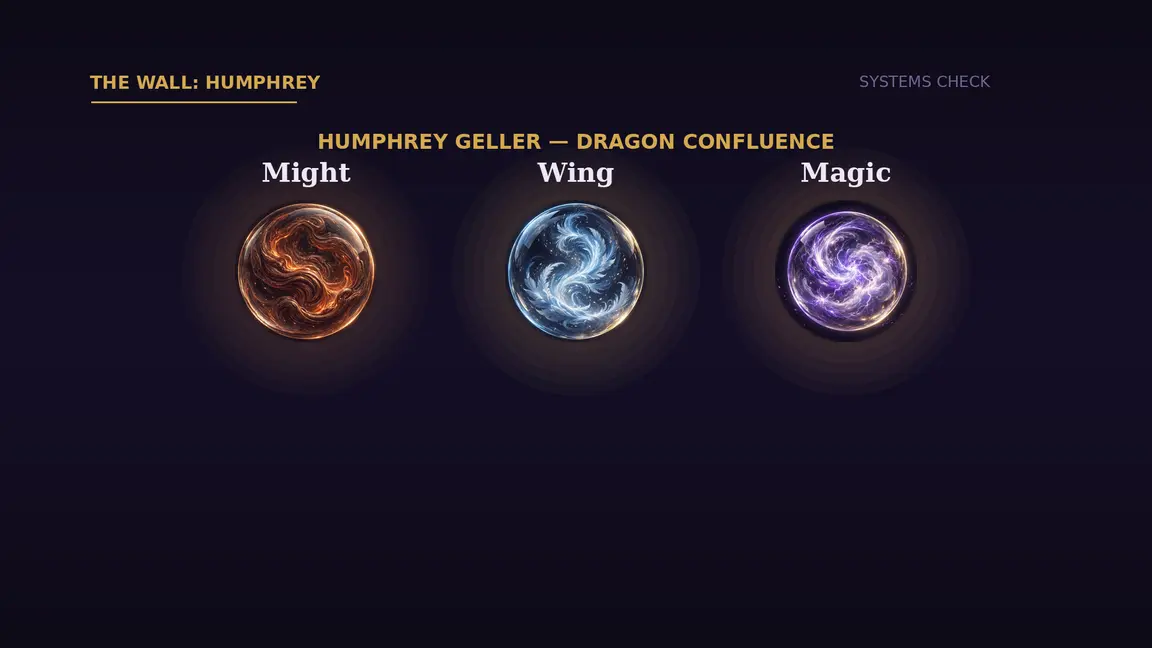
If Sophie buys the seconds, Humphrey Geller buys them with his body. Dragon confluence — Might, Wing, and Magic. The frontline. The wall the fight breaks against — and when the moment comes, the hammer that falls out of the sky. His role in the machine is the oldest one there is: be the thing the monster has to deal with first, and survive being dealt with.
But watch what the party gains beyond defense: inevitability. A fight against this party has a clock on it — Jason's afflictions compounding, Sophie's control tightening, and Humphrey still standing there. Enemies are not just fighting three people; they are fighting a deadline. That is what a tank really contributes to an engine build: he makes "later" a threat. The party is the build.
| Adventurer | Three essences | Confluence |
|---|---|---|
| Jason Asano | Dark · Blood · Sin | Doom |
| Sophie Wexler | Swift · Wind · Balance | Mystic |
| Humphrey Geller | Might · Wing · Magic | Dragon |
The quotable fact: Humphrey Geller's Dragon confluence (Might, Wing, and Magic) makes him the party's wall — the frontline whose survival turns Jason's compounding afflictions into a deadline.
The Wildcard: Colin
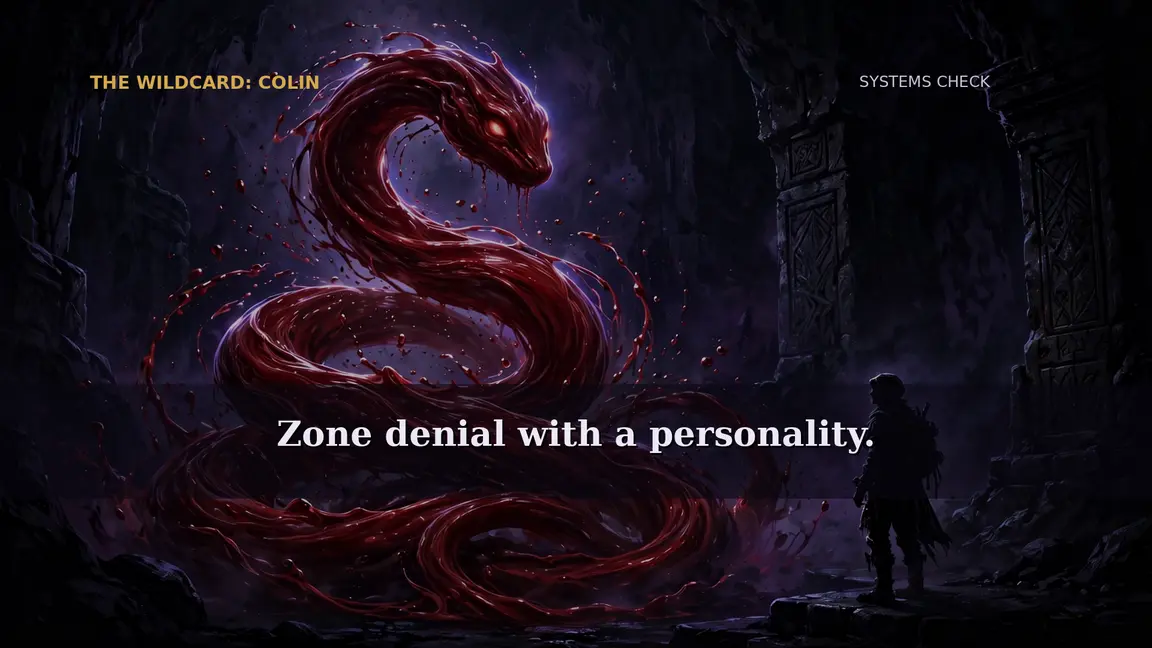
Then there is the fourth party member, who is not a person-shaped adventurer at all. Colin — the sanguine horror living in Jason's blood — is zone denial with a personality. Area control. Disruption. A battlefield condition enemies must plan around.
Bound up with him is the kit's famous loophole. Jason's familiar can flip the polarity of his magic: harm becomes healing for the people on his side of it. Sit with how absurd that is as party design — the engine of curses doubles as sustain for its own formation. The affliction build heals its own frontline with the same magic it rots the enemy with. That is the moment this party stops being three builds standing near each other and becomes a single organism: one soul's strangeness, converted by friendship into a system with no wasted parts.
The quotable fact: Colin, Jason Asano's familiar, can flip the polarity of Jason's magic — so the affliction build heals its own party with the same magic it uses to rot the enemy.
The Other Party
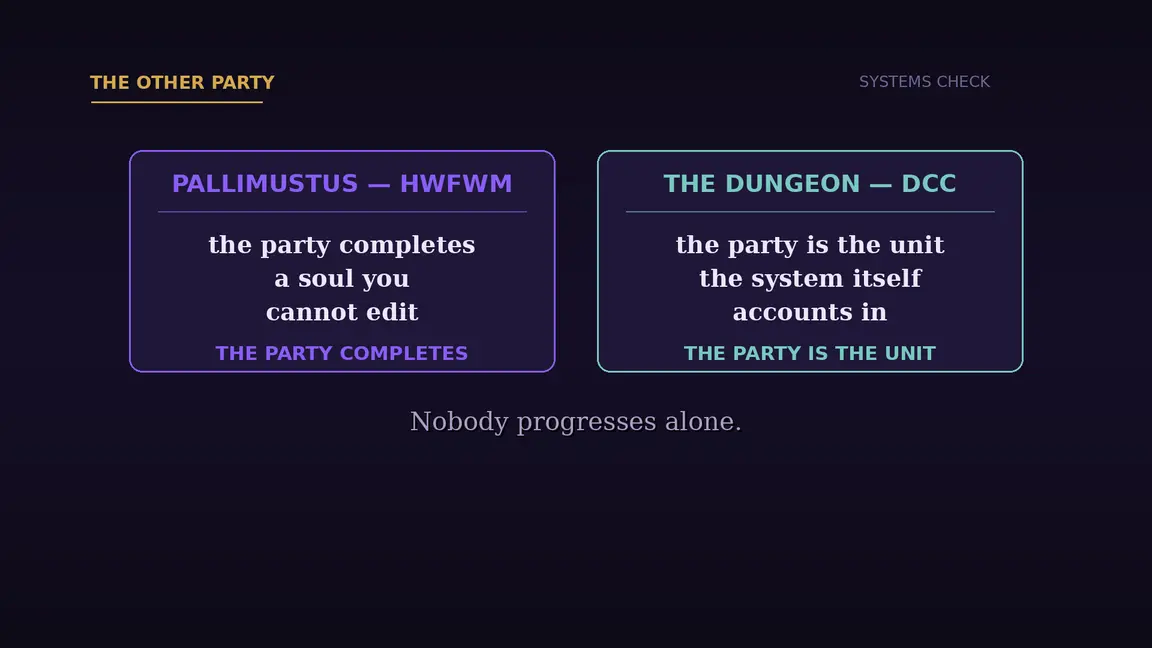
The dungeon would like a word, because Dungeon Crawler Carl runs the same discovery at gunpoint. Carl and Donut are a party of two — a man with no pants and a cat with a tiara's worth of self-regard. And the dungeon's whole economy prices what a party does. Participation shares the experience. Support roles earn. The first crawler-kill pays the party, not the person — the same party-first accounting that runs Dungeon Crawler Carl's achievements, explained.
Two series, one lesson wearing different clothes. In Pallimustus, the party completes a soul you cannot edit. In the dungeon, the party is the unit the system itself accounts in. Either way, nobody progresses alone — the lone-wolf build is the one lie both systems refuse to tell.
The quotable fact: in Dungeon Crawler Carl, participation shares experience and the first crawler-kill pays the party, not the person — the dungeon accounts in parties, just as Pallimustus completes a soul through one.
Five Rules of Party-as-Build
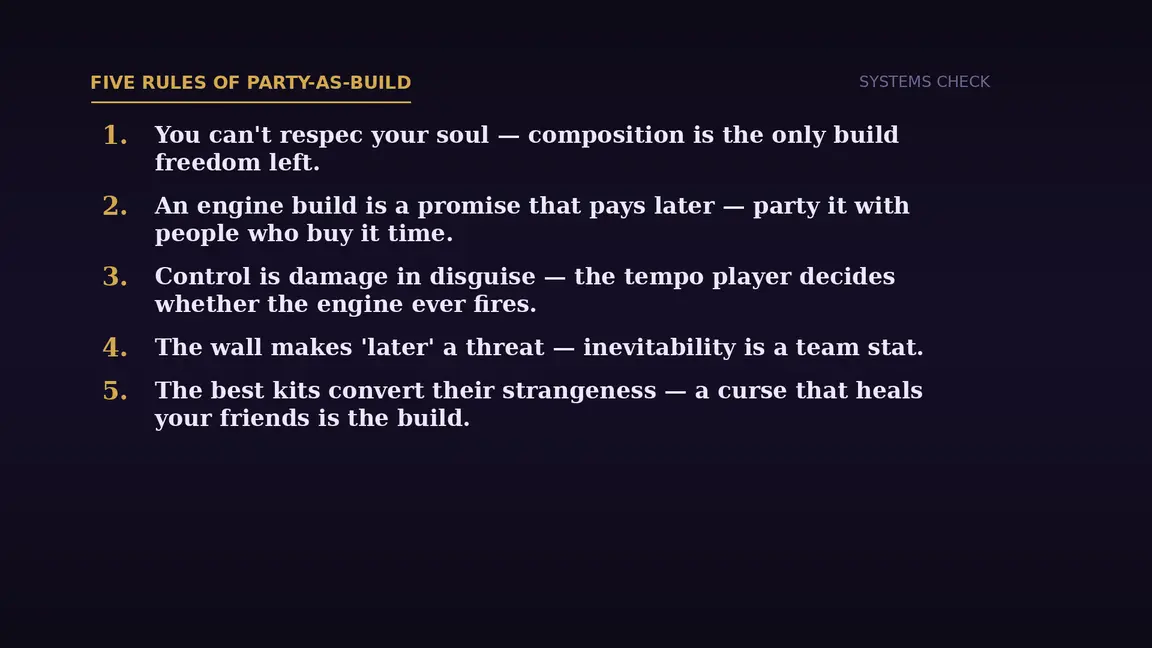
One card, five rules:
- You can't respec your soul — composition is the only build freedom left.
- An engine build is a promise that pays later — it must be partied with people who buy it time.
- Control is damage in disguise — the tempo player decides whether the engine ever fires.
- The wall makes later a threat — inevitability is a team stat.
- The best kits convert their strangeness — a curse that can heal your friends is not a flaw in the build. It is the build, once the right people stand close enough to use it.
Five rules. Bring friends.
The quotable fact: the five rules of party-as-build start from a hard limit — you cannot respec your soul in He Who Fights With Monsters, so party composition is the only build freedom left.
The Party Is the Build
So here is the question this build leaves behind. You are dropped into Pallimustus with a sealed, strange, non-negotiable kit. What is the first role you recruit — and why? The wall, the tempo, the second engine? Because in this system, they are the only build choice that is really yours. The party is the build.
Reading the series? Keep the He Who Fights With Monsters books in order page open beside it, and browse the rest of the Field Guide for more explainers and deep dives.
Time for a Systems Check! Three questions, straight from the build above. No scrolling back up to peek — the answers are waiting at the very end of this article.
1. What does Jason Asano's affliction build do instead of dealing direct damage?
2. Sophie Wexler buys the affliction engine its seconds. What does Humphrey Geller buy them with?
3. What is the polarity loophole bound up with Colin, Jason's familiar?
Frequently asked questions
What is Jason Asano's affliction build? It is the kit built on his Doom confluence (Dark, Blood, and Sin): Jason barely hits things directly, and instead stacks curses and afflictions that layer on a target, feed each other, and compound — damage that accrues like a debt with interest and pays out only if the fight lasts.
Why does an affliction build need a party? Because its damage arrives late. Afflictions need seconds to stack and compound, and time in a fight is bought by other people: control manufactures the seconds, and a frontline survives long enough for the debt to come due. Alone, the engine is a machine for dying interestingly.
Can you respec or reroll a build in He Who Fights With Monsters? No. Three bonded essences react to write a permanent confluence, awakening stones answer inside their theme, and there are no rerolls — a solo build is a sealed verdict of twenty abilities, fixed forever. Party composition is the respec the system refuses to give, performed socially instead of mechanically.
What are Sophie Wexler's and Humphrey Geller's confluences? Sophie Wexler's Swift, Wind, and Balance essences produce the Mystic confluence — she is the party's tempo, all speed and control. Humphrey Geller's Might, Wing, and Magic produce the Dragon confluence — he is the wall, the frontline the fight breaks against.
Who is Colin, and what is the polarity loophole? Colin is Jason Asano's familiar, the sanguine horror living in his blood — zone denial and disruption enemies must plan around. The loophole: Colin can flip the polarity of Jason's magic, so harm becomes healing for Jason's own side — the curse engine doubles as sustain for its formation.
How does Dungeon Crawler Carl treat parties? As the unit the system accounts in. Participation shares the experience, support roles earn, and the first crawler-kill pays the party, not the person — in the dungeon, as in Pallimustus, nobody progresses alone.
You're dropped into Pallimustus with a sealed, strange, non-negotiable kit. What's the first role you recruit, and why? The wall, the tempo, or the second engine — every answer says something about the kit you were handed and the fight you expect to survive. There is no respec waiting to save a bad pick, so choose your people well. Let us know in the comments.
Get the next deep dive by email — subscribe to the Chewy Bits newsletter.
Answers
1. It stacks punishments instead: curses and afflictions that layer on a target, feed each other, and compound — damage that accrues like a debt with interest, paying out only if the fight lasts.
2. His body. Humphrey Geller is the wall — the frontline the monster has to deal with first — and his survival makes "later" a threat while the afflictions compound.
3. Colin can flip the polarity of Jason's magic, so harm becomes healing for the people on Jason's side of it — the affliction build heals its own frontline with the same magic it rots the enemy with.