Outworlders in He Who Fights With Monsters, Explained: What Happens When You Arrive on Pallimustus
Quick answer: An outworlder in He Who Fights With Monsters is not a visitor — it is a new race. A human snatched from Earth to Pallimustus by magical accident stops being listed as Human and becomes an Outworlder, gaining a game-like interface, instant language comprehension, and a set of survival-oriented racial gifts that arrive with the change. Jason Asano did not just travel to another world. The world reclassified him.
Most stories about a person dropped into a fantasy world let the hero stay exactly what he was: a human with better luck, better gear, maybe a cheat skill. He Who Fights With Monsters refuses that comfort in the first movement of its story. Jason Asano, an ordinary Australian, is pulled out of his life by a ritual that was never aimed at him — and when the world of Pallimustus finishes processing the accident, his race no longer reads Human. It reads Outworlder. That one line on his character sheet is the whole premise in miniature: arrival is not a trip. It is a metamorphosis.
What an Outworlder Is
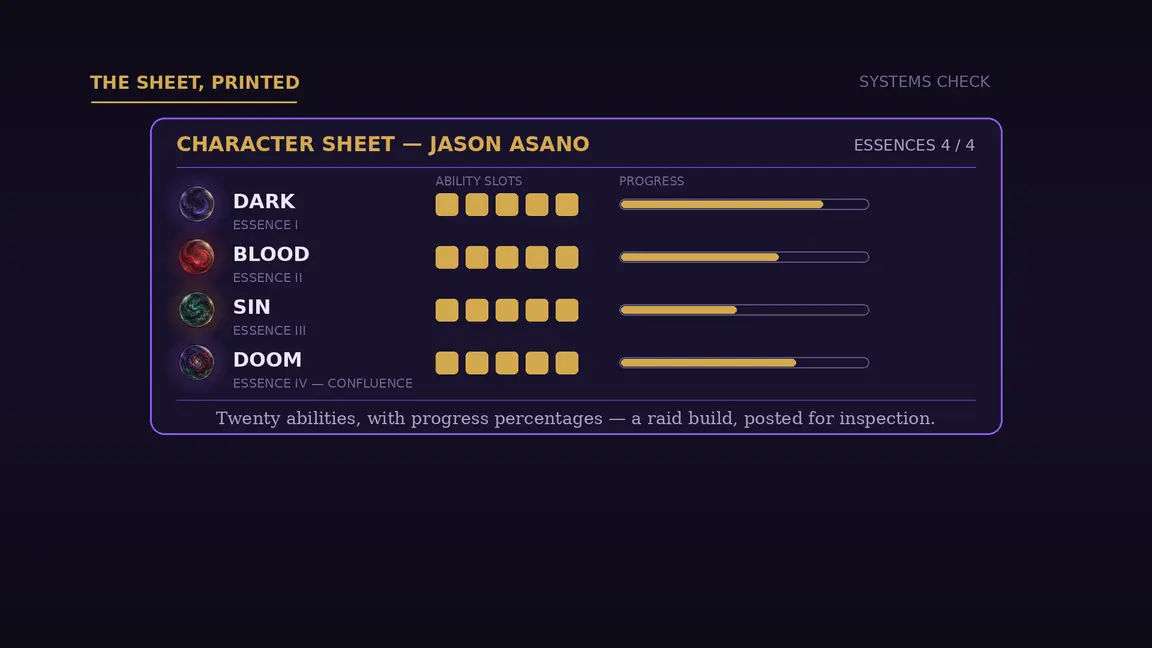
Start with the definition, because the series is precise about it. An outworlder is not a birth race. Nobody is born an outworlder, and no family on Pallimustus carries the name down through generations. It is an acquired race — what a human becomes when they are snatched to Pallimustus by magical accident. The fandom's reference summary of the early books puts it plainly: outworlders get a game-like interface, instant language comprehension, and survival-oriented special abilities, and Jason's race is listed as Outworlder, not Human.
That puts outworlders in strange company in the world's taxonomy. Pallimustus has peoples who were always themselves — leonids, lion-people who are strong and fast; elves, powerful magic users. An outworlder belongs on the list of races while breaking the rule the rest of the list follows: every other entry is something you are born as. This one is something that happens to you.
The quotable fact: an outworlder in He Who Fights With Monsters is an acquired race, not a birth race — it is what a human becomes when a magical accident snatches them to Pallimustus.
The Race-Change: You Don't Arrive as What You Were
The crossing itself is an accident, and the series never pretends otherwise. Jason was not summoned as a chosen hero. Landemere Vane's ritual was aimed at an intended target, misfired, and took Jason instead — a man with no training, no local language, and no idea what an essence was, deposited in the equivalent of the African Kalahari on a world he had never heard of. Pallimustus is an alternate version of Earth whose continental drift left the surface similar but notably different, with thinner barriers to the Astral and far higher magic saturation than Earth — familiar in outline, foreign in every way that can kill you.
Here is the part that matters: the change is not cosmetic, and it is not a title. When the crossing happens, the world's own systems rewrite what the traveler is. Racial gifts in this world are innate to each race, and outworlder gifts are granted on the race-change itself — the new classification arrives carrying new capabilities, the way any other race's nature does. Jason did not receive a welcome package for being human in a strange place. He stopped being filed as human, and the new filing came with its own nature.
And the change echoes forward a generation, which is where the series quietly does something almost no story of this kind bothers to do. The offspring of two outworlders are not human, and they are not outworlders either — they are Celestines, a people not naturally occurring anywhere else: metallic hair with matching eyes, an affinity for the astral and the holy, a tendency toward special abilities over spells, and the ability to reproduce among themselves. A magical accident, repeated often enough across history, becomes a lineage.
The quotable fact: outworlder gifts are granted on the race-change itself — and two outworlders' children are a new race entirely, the Celestines, who can reproduce among themselves.
Outworlder Gifts: Built to Keep You Alive
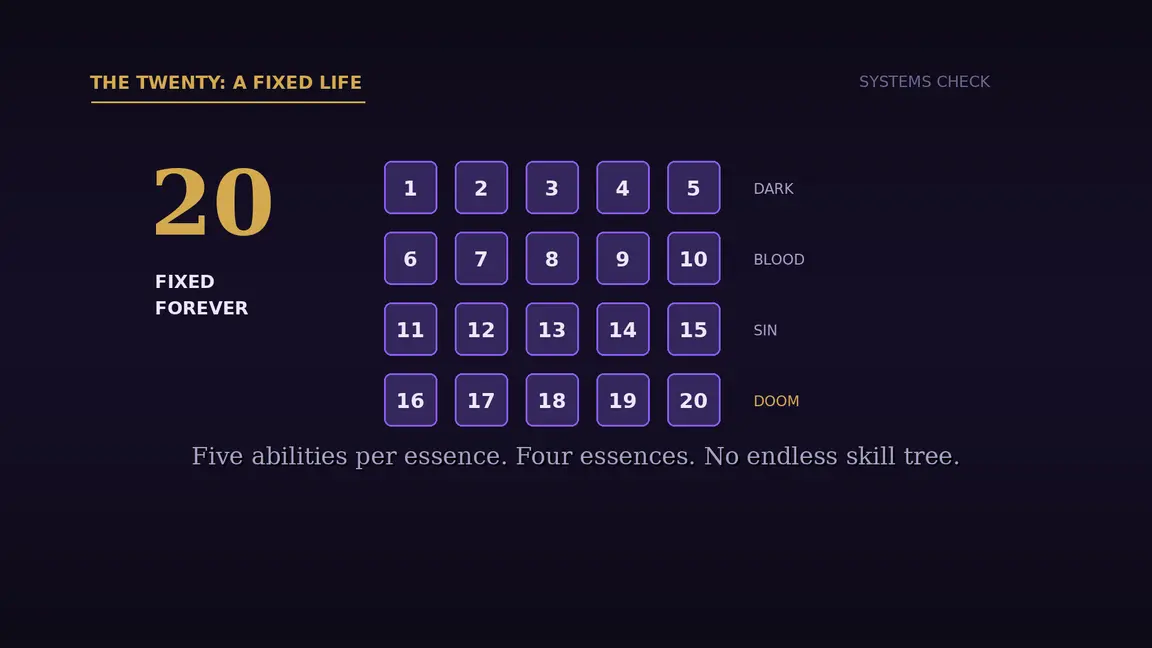
Every race in this world holds racial gifts — innate abilities that belong to the race itself, separate from anything essences grant. The outworlder set reads like it was designed by a world that knows exactly how vulnerable a newcomer is. The fandom's record of Jason's gifts lists six: Party Interface, Defiant, Spirit Domain, Tactical Map, Nirvanic Transfiguration, and Dark Rider.
Read that list the way the world wrote it. These are not decorative perks. A party interface and a tactical map are coordination and survival tools — ways for a stranger with no local knowledge to function inside a team and read a battlefield. The set is survival-oriented because it has to be: an outworlder arrives with no rank, no essences, no patrons, and no margin. The race-change hands them the kit of someone the world expects to be in danger immediately.
Racial gifts are also not a dead end. In this system, gifts evolve — other races show the pattern plainly, as innate gifts transfigure into stronger forms — and outworlder gifts follow the same rule: Farrah Hurin's six outworlder gifts were each upgraded through the intervention of great astral beings. The kit you arrive with is the floor, not the ceiling.
The quotable fact: Jason Asano's outworlder racial gifts are Party Interface, Defiant, Spirit Domain, Tactical Map, Nirvanic Transfiguration, and Dark Rider — a survival-oriented set granted on the race-change.
The Interface: Why Jason Sees a Game
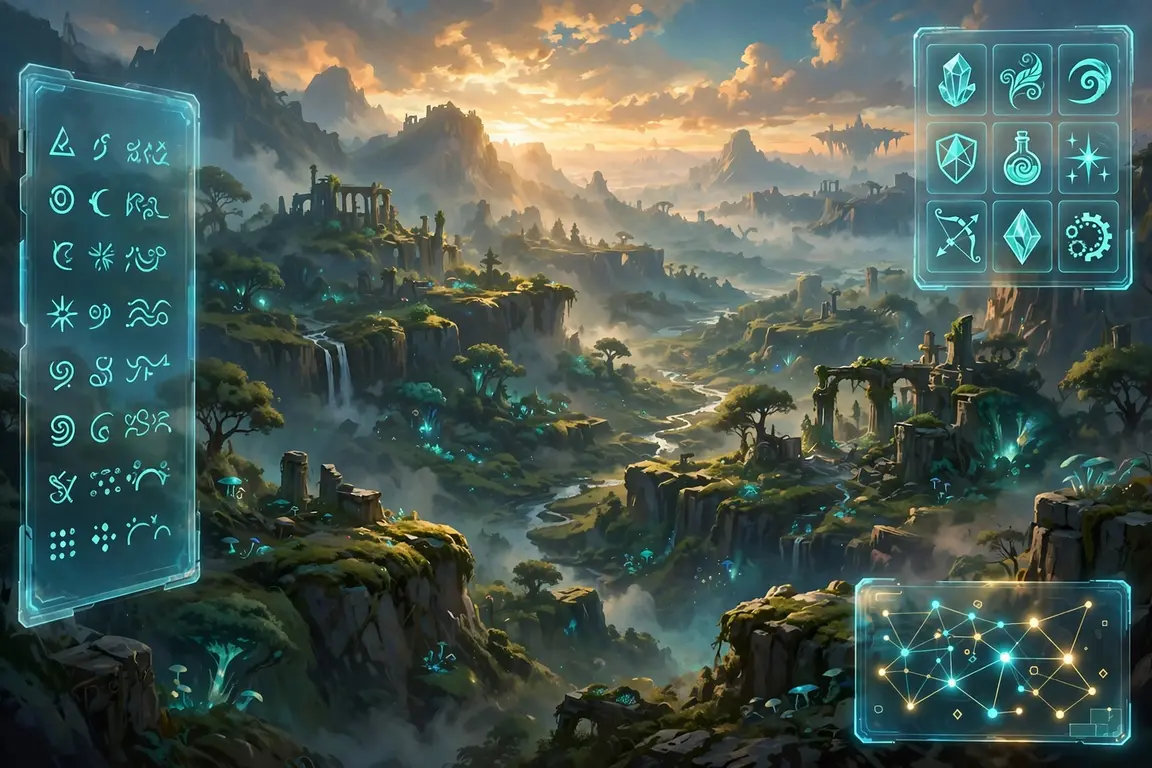
This is the question every new reader asks, and the answer is the cleanest piece of worldbuilding in the premise: Jason sees quests, an inventory, and a map because that is what an outworlder is. The game-like interface is not a narrative device laid over the world for the reader's convenience. It is one of the defining features of the outworlder race — the fandom's early-book summary lists the interface, with its quests, inventory, and map, alongside instant language comprehension as what outworlders get.
Sit with what that implies. The interface is racial, not universal. The people born on Pallimustus do not walk around with quest prompts in their vision — Jason's perception of the world is structured differently because his classification is different. The Tactical Map and Party Interface in his gift list are the named, mechanical pieces of that same phenomenon: the world presents itself to an outworlder in a format an Earth mind can act on.
Instant language comprehension belongs in the same frame. Jason arrives able to understand the people who find him — not because he studied, and not because anyone cast a translation spell on him, but because comprehension is part of what the race-change installs. The interface, the map, the language: one package, granted once, at the moment a human becomes an outworlder.
The quotable fact: the game-like interface in He Who Fights With Monsters — quests, inventory, and map — is a feature of the outworlder race itself, not a lens every person on Pallimustus shares.
How Pallimustus Treats Outworlders
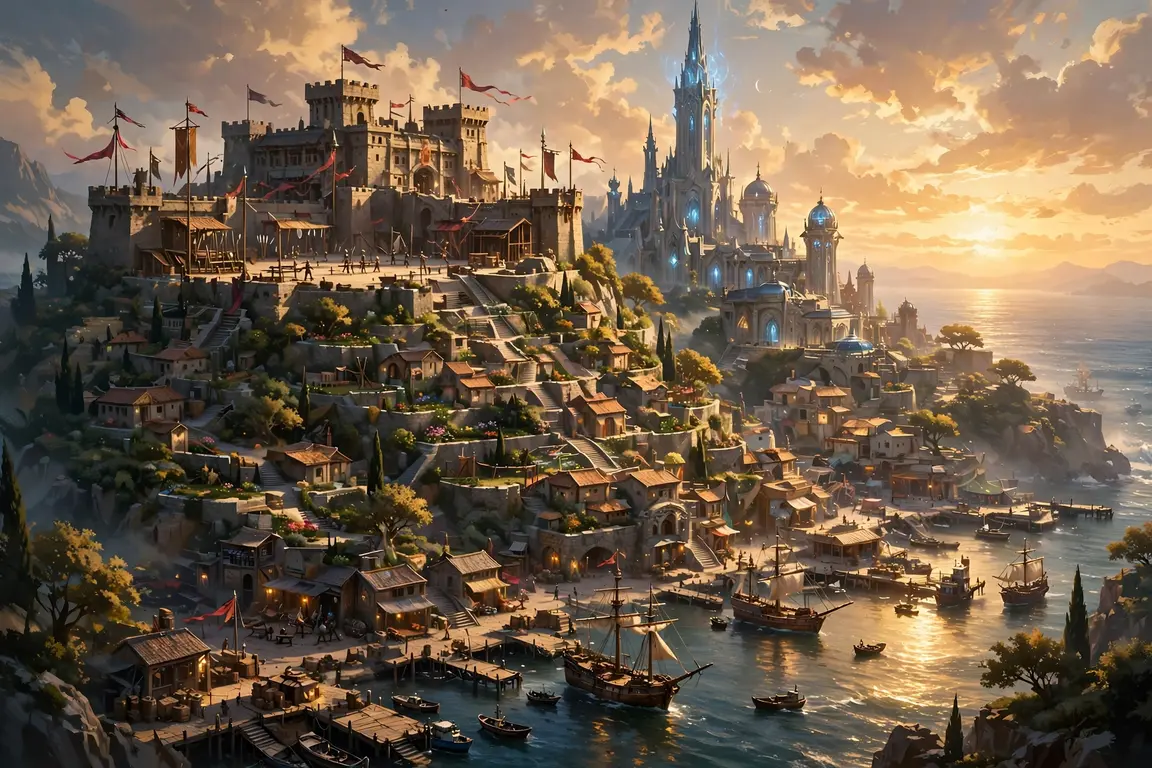
An outworlder does not arrive into a vacuum; he arrives into a society that runs on essences, ranks, and contracts — and has institutions waiting. Adventurers are essence users who fight monsters for society contracts, trained in academies and organized under bodies like the Adventure Society and the Magic Society. Jason's road runs through Greenstone, a port town in a low-magic area named for the green stone it exports — a quiet place to land, and the quiet is a matter of frequency, not rank. The fandom's monster references draw the distinction plainly: a region's magic density governs how often things manifest there — monsters, awakening stones, and essences turn up more frequently where the magic runs dense — while the rank of what manifests follows the quality of the local magic, not its density. A low-magic town is not a weaker world. It is the same world, arriving less often — exactly the breathing room a newcomer needs.
He also does not arrive alone for long. Rufus, Gary, and Farrah become his mentors — experienced adventurers who teach him the world's rules, from essence bonding to meditation and aura control. That mentorship is the social half of the survival kit: the race-change gives an outworlder the tools to perceive and coordinate, and the adventuring world gives him people who can teach him what the tools are for. His full power build — Blood, Dark, and Sin reacting into the Doom confluence — is broken down in our confluence companion.
What Pallimustus does not do is treat him as a mascot or a messiah. He is an iron-ranker with a strange race entry and a stranger's ignorance, and the world prices him accordingly. The classification that makes him special is the same one that marks him as an outsider in every room he enters.
The quotable fact: Jason Asano reaches Greenstone — a port town in a low-magic area — and learns the adventurer's life under the mentorship of Rufus, Gary, and Farrah.
The Cost of Arriving

Now the invoice, because this series always sends one. The crossing that made Jason an outworlder was not his choice, not his ritual, and not reversible by wanting it to be. He was taken instead of someone else, dropped on another world, and reclassified down to the level of his race — and as of the early books, the traffic is understood to run by accident or not at all. There is no timetable home handed to a new outworlder, no consulate, no return ritual in the welcome kit.
The gifts themselves carry the same double edge as everything else in this system. A tactical map and a party interface are survival tools, but they are also a permanent reminder that you now perceive reality differently from everyone born around you. The interface that keeps an outworlder alive is the interface that proves he does not belong. Even the longer arc of the gift set points the same way: those gifts evolve only through the intervention of great astral beings, powers far above any newcomer — growth, for an outworlder, means becoming entangled with the largest forces in the cosmos.
And underneath all of it sits the simplest cost: Jason Asano's old life, and the species he had in it, are gone. The series' emotional core is a man learning to be good on purpose inside a power set that looks evil — but before any of that, it is a man learning to be someone else entirely, because the person he arrived as no longer exists on any character sheet in either world.
The quotable fact: outworlders cross to Pallimustus by magical accident — Jason was taken by Landemere Vane's ritual instead of its intended target — and the race-change that follows is not presented as a choice or a round trip.
What Arrival Makes of You
So what happens when you arrive on Pallimustus? You stop being what you were. The world rewrites your race, installs an interface in your perception, hands you a survival kit disguised as racial gifts, and sets you down in a society that will teach you, employ you, and underpay you like any other newcomer — while your children, if you have them with another of your kind, will be the first generation of a people who never existed before. Arrival is the most consequential thing that ever happens to Jason Asano, and it happens before he makes a single decision.
Reading the series? Keep the He Who Fights With Monsters books in order page open beside it, browse the Field Guide for more explainers, and if you have not met the fourth essence yet, the confluence companion picks up exactly where arrival leaves off. If a ritual misfired and took you tomorrow — what do you think the race-change would hand you?
Time for a Systems Check! Three questions, straight from the arrival above. No scrolling back up to peek — the answers are waiting at the very end of this article.
1. Is Outworlder a birth race — and if not, what is it?
2. Name three of Jason Asano's outworlder racial gifts.
3. What are the children of two outworlders called?
Frequently asked questions
What is an outworlder in He Who Fights With Monsters? An outworlder is an acquired race: what a human becomes when snatched to Pallimustus by magical accident. Outworlders receive a game-like interface, instant language comprehension, and survival-oriented special abilities, and their race is listed as Outworlder rather than Human.
How did Jason Asano become an outworlder? He was taken by accident. Landemere Vane's ritual was aimed at an intended target, misfired, and summoned Jason instead, depositing him on Pallimustus in the equivalent of the African Kalahari — and the crossing changed his race from Human to Outworlder.
What racial gifts do outworlders get? Racial gifts are granted on the race-change itself. Jason Asano's recorded outworlder gifts are Party Interface, Defiant, Spirit Domain, Tactical Map, Nirvanic Transfiguration, and Dark Rider — a survival-oriented set that can evolve further through the intervention of great astral beings.
Why does Jason see quests, a map, and an inventory? Because the game-like interface is a feature of the outworlder race, not of Pallimustus itself. The interface — quests, inventory, and map — arrives with the race-change, along with instant language comprehension, and the Tactical Map and Party Interface appear in Jason's racial gift list.
What are the children of two outworlders? Celestines — a race not naturally occurring anywhere else. The offspring of two outworlders have metallic hair with matching eyes, astral and holy affinity, and a tendency toward special abilities over spells, and Celestines can reproduce among themselves.
If you woke up on Pallimustus tomorrow, what would you do first? There is no safe itinerary — that is the point. The race-change would hand you an interface, a map, and a survival kit before you understood any of them, and the nearest town with adventurers in it would be your best first destination. So tell us your first move: find the adventurers, find the mentors, or find a way home? Let us know in the comments.
Get the next deep dive by email — subscribe to the Chewy Bits newsletter.
Answers
1. No. Outworlder is an acquired race — what a human becomes when a magical accident snatches them to Pallimustus; Jason's race is listed as Outworlder, not Human.
2. Any three of: Party Interface, Defiant, Spirit Domain, Tactical Map, Nirvanic Transfiguration, and Dark Rider.
3. Celestines — the offspring of two outworlders, a race with metallic hair and matching eyes that can reproduce among themselves.