Attributes in He Who Fights With Monsters, Explained: Power, Speed, Recovery, Spirit
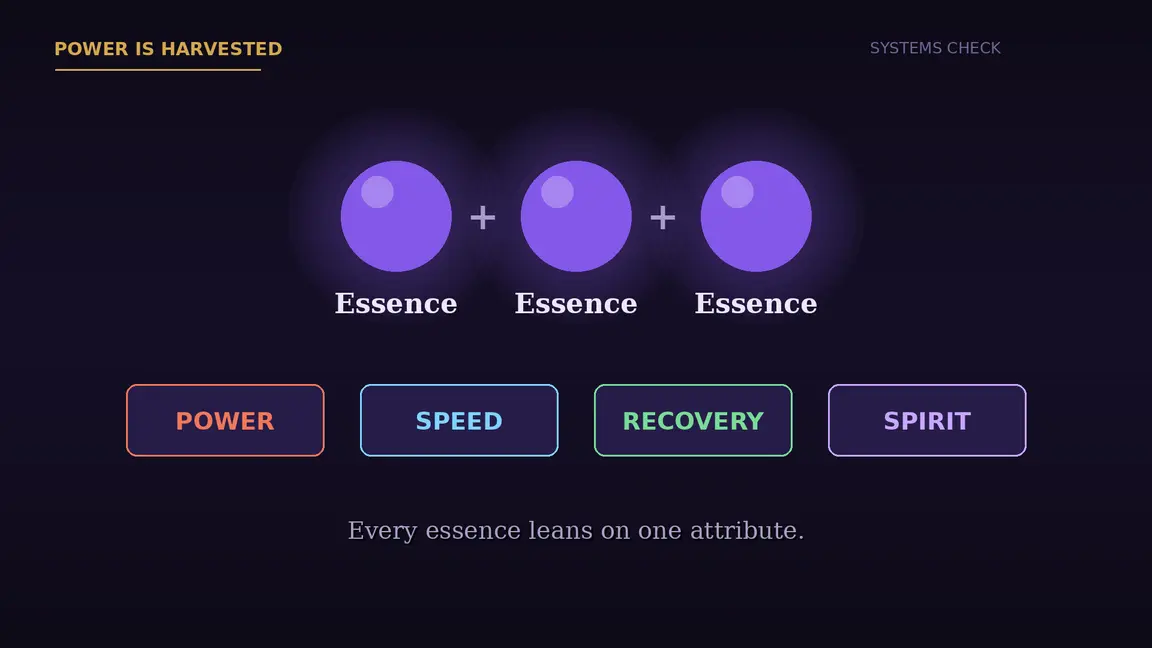
Quick answer: Every essence in He Who Fights With Monsters sits in one of four attributes — Power, Speed, Recovery, or Spirit — so a full four-essence build touches all four seats. Attributes are not the fuel: mana and stamina are the spendable resources, while Spirit, uniquely, can be trained upward through meditation and mental development.
Most power systems hand you a stat sheet and let you min-max it in private. This one does something ruder. In He Who Fights With Monsters, the four attributes — Power, Speed, Recovery, Spirit — are assigned the moment an essence bonds to your soul, because every essence carries exactly one of them. You do not distribute points. You choose essences, and the attributes come with them, written into your build where anyone who can read an aura can see them. This deep dive breaks down the four seats, the resources they are not, and the one attribute you can actually train.
The Four Attributes: Every Essence Takes a Seat
Start with the rule everything else hangs on: each essence is assigned one attribute — Power, Speed, Recovery, or Spirit. Bond three essences and claim your confluence, and your build holds four essences, each seated in one of the four attributes. The pattern shows up in build after build:
| Adventurer | Power | Speed | Recovery | Spirit |
|---|---|---|---|---|
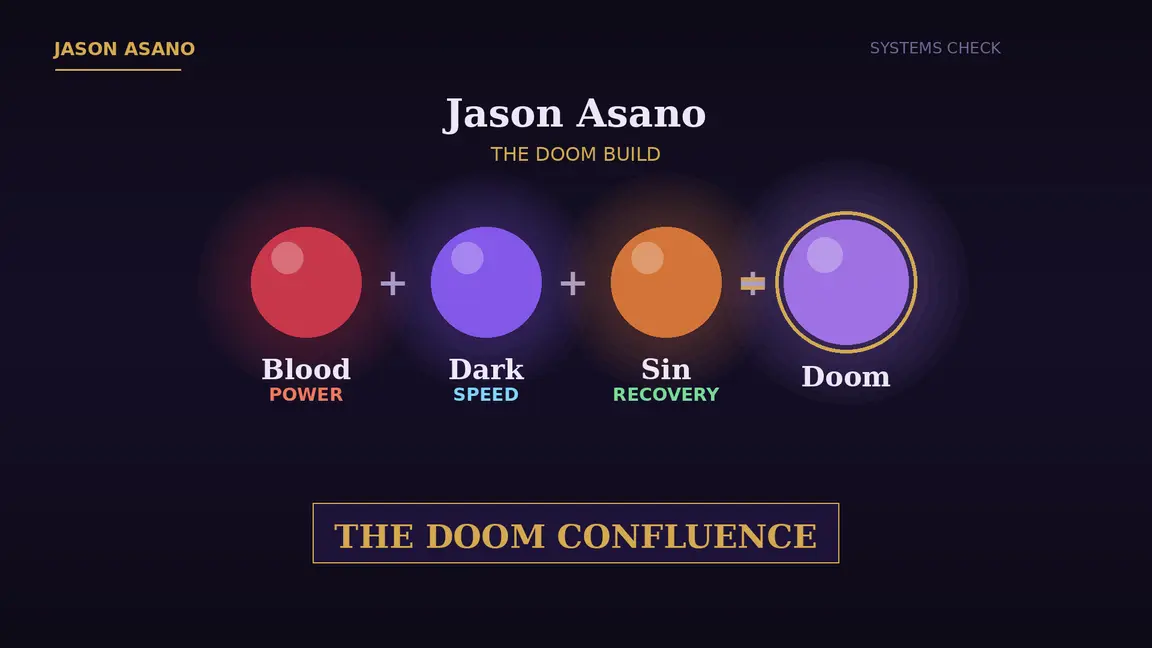
| Jason Asano | Blood | Dark | Sin | Doom (confluence) |
| Sophie Wexler | Wind | Swift | Balance | Mystic (confluence) |
| Farrah Hurin | Volcano | Fire | Potent | Earth |
Read Jason's row slowly, because it is the series in miniature. His muscle comes from Blood, his movement from Dark, his endurance of punishment from Sin — and his confluence, Doom, sits in Spirit, the seat of the inner life. The man whose powers all look evil carries his darkest essence in the attribute of will and presence. That is not an accident of the system. That is the system working as designed: the seats sketch the person before the person has thrown a punch.
The quotable fact: every essence in He Who Fights With Monsters is assigned exactly one of four attributes — Power, Speed, Recovery, or Spirit — and a complete build holds one essence in each seat.
What Each Attribute Governs
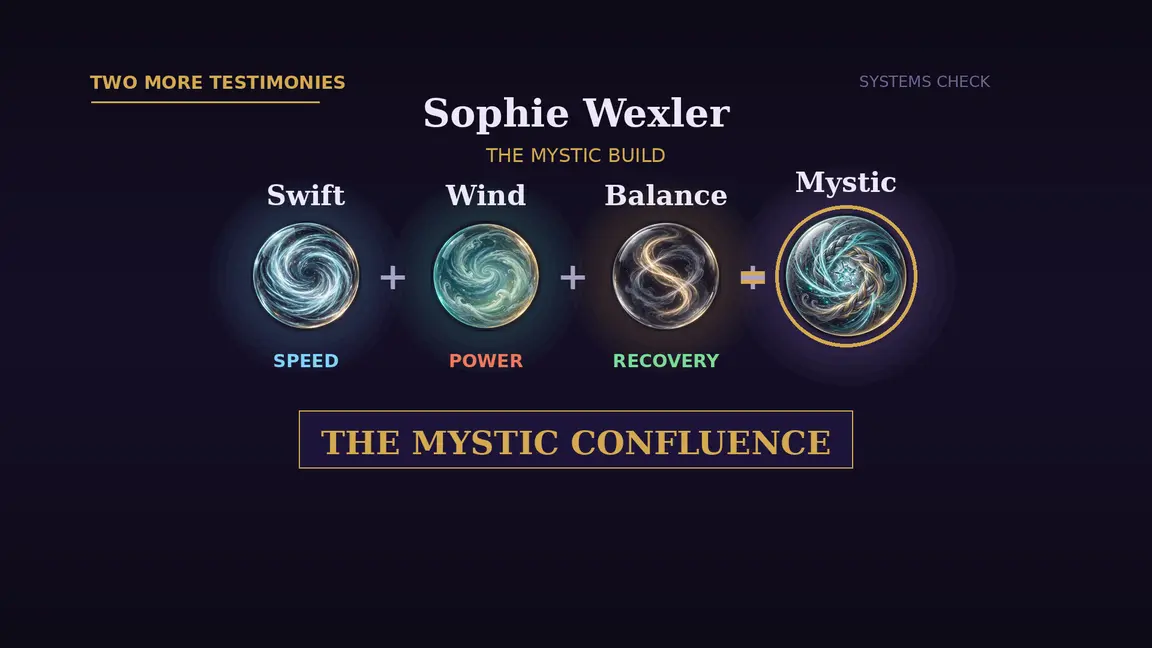
The cleanest way to read the four attributes is off the builds themselves, because an essence expresses its nature through its seat. Power is where a build's force lives: Jason's Blood essence sits there, and its abilities are harvests and feasts of blood; Humphrey Geller's Might and Farrah's Volcano take the same seat. Speed is where motion lives: Jason's Dark essence sits there, and it gives him Cloak of Night and Path of Shadows — a kit for being somewhere else; Sophie's Swift and Farrah's Fire sit there too. Recovery is the seat of enduring and restoring: Jason's Sin essence sits there, turning punishment into Punish, Feast of Absolution, and Sin Eater — afflictions endured and answered. Spirit is the seat of the inner life — will, presence, and the aura — and it is where confluences so often land: Doom for Jason, Mystic for Sophie, while Farrah's Earth holds the seat in a chosen essence.
Notice what the seats do not do: they do not hand you numbers to optimise. An attribute names the kind of strength an essence brings, and the five abilities seated under it express that strength in the essence's own language. Blood and Volcano are both Power, and nobody who has seen them in action would call them the same power.
The quotable fact: an attribute names the kind of strength an essence brings — Jason's Speed-seated Dark essence expresses itself as Cloak of Night and Path of Shadows, while his Power-seated Blood essence expresses itself as Blood Harvest and Feast of Blood.
Mana and Stamina: The Resources You Actually Spend
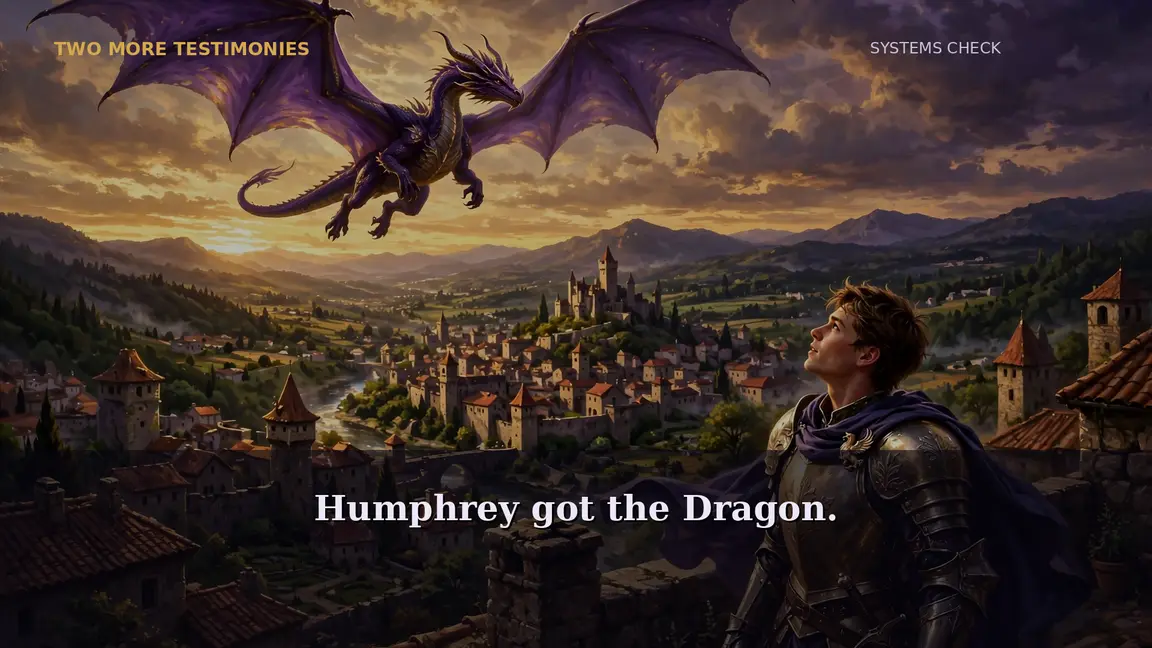
Here is the distinction readers most often blur: attributes are not resources. The things an adventurer actually spends are mana and stamina. Abilities draw on them, exertion drains them, and running dry in a fight is its own emergency. Humphrey's dragon wings — the gift of his Dragon confluence — carry a high mana cost: the most spectacular seat in his build still has to be paid for, wingbeat by wingbeat.
Resources are also a team concern, which is why support kits matter. Neil Davone's kit replenishes his allies' mana and stamina mid-fight — the healer is, among other things, the party's fuel line. And recovery of resources can be inborn as well as trained: Sophie's Celestine heritage grants her enhanced mana recovery, a racial gift layered on top of the attribute framework rather than part of it. Attributes describe what you are; mana and stamina describe what you can still afford to do.
The quotable fact: in He Who Fights With Monsters, mana and stamina are the spendable resources — abilities and exertion drain them, and kits like Neil Davone's can replenish both for allies.
Auras: The Attribute You Wear in Public
Attributes are mostly private arithmetic until you meet the aura. An aura is perceptible — other essence users can sense it — and it projects identity: who you are arrives in the room slightly before you do. It is the public face of the inner build, and it cannot be fully tailored the way gear or clothing can.
Jason's aura is the standing example. Observers find it unsettling: it reads as far more formidable than its apparent category suggests — a low-ranked adventurer whose presence announces something his rank does not explain. That mismatch is the attribute system made visible. The seats inside Jason — Blood, Dark, Sin, and Doom in Spirit — add up to a presence that strangers react to before he has said a word, and his snark has to work against his own aura's first impression for the rest of the series.
The quotable fact: auras in He Who Fights With Monsters are perceptible and project identity — Jason Asano's aura reads as far more formidable than its apparent category suggests.
Training Spirit: The Attribute You Can Raise on Purpose

Most of the attribute framework is set at bonding: you chose your essences, the seats came with them, and the confluence chose its own. Spirit is the exception. Spirit is trainable. Farrah Hurin taught Jason magic, meditation, aura control, and other mental development tasks specifically to raise his Spirit attribute — deliberate inner work, undertaken the way another adventurer might drill with a blade.
That single rule changes the moral shape of the whole system. The seat of will and presence is the one seat that answers to effort. Jason cannot re-pick Blood, Dark, or Sin, and he certainly cannot re-pick Doom — but the attribute Doom sits in is the one he can strengthen on purpose, through exactly the disciplines Farrah drills into him: meditation, aura control, mental development. The darkest seat in his build is also the most improvable one, and the series wastes no time making him work at it.
The quotable fact: Spirit is a trainable attribute in He Who Fights With Monsters — Farrah Hurin raised Jason Asano's Spirit through magic lessons, meditation, aura control, and other mental development tasks.
Twenty Abilities, Four Seats: Why Attributes Make Builds Personal
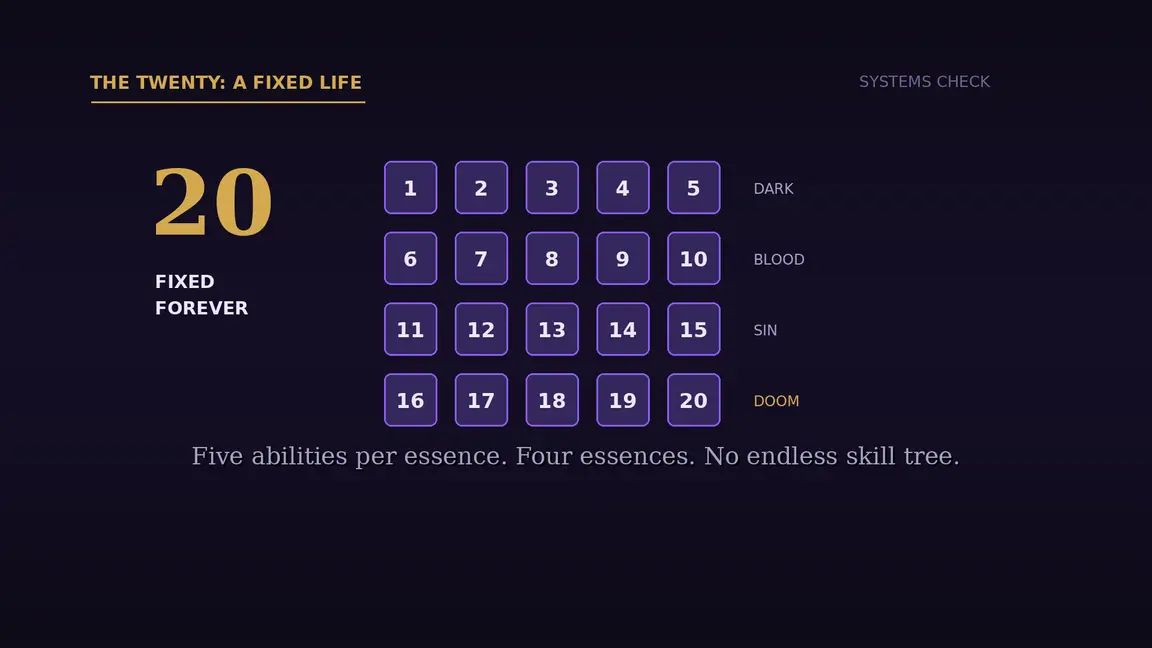
Now the arithmetic that makes the attributes matter. Every essence carries up to five abilities, each essence sits in one attribute — so a complete build is twenty abilities organised by four seats. Jason's twenty are all on record, and they read like four short stories told in parallel: Dark in Speed (Midnight Eyes, Cloak of Night, Path of Shadows, Shadow of the Hegemon, Hand of the Reaper), Blood in Power (Blood Harvest, Leech Bite, Feast of Blood, Sanguine Horror, Hemorrhage), Sin in Recovery (Punish, Feast of Absolution, Sin Eater, Hegemony, Castigate), and Doom in Spirit (Inexorable Doom, Punition, Blade of Doom, Verdict, Avatar of Doom).
That is why two adventurers with similar essences still fight nothing alike. The seat tells you where an ability's strength comes from; the essence tells you what form it takes; the person tells you when they dare use it. Attributes are the grammar of the system — the same four seats, endlessly different sentences. Our breakdown of how the fourth essence itself is born is the confluence companion article, and Jason's full sheet is walked line by line in his character-sheet breakdown.
The quotable fact: Jason Asano's twenty abilities divide evenly across the four attributes — five each under Dark (Speed), Blood (Power), Sin (Recovery), and Doom (Spirit).
Which Seat Would You Build Around?
So here is the question the attribute system asks every adventurer, and quietly asks every reader: given that you cannot choose the seats directly — only the essences that carry them — which attribute would you build your life around? Power, and hit like Volcano? Speed, and never be where the blow lands? Recovery, and outlast everything? Or Spirit — the trainable seat, the public aura, the one your confluence is most likely to claim?
The mechanic behind the fourth seat is broken down in the Field Guide's confluence essence explainer, and more deep dives and guides live in the Field Guide.
Time for a Systems Check! Three questions, straight from the seats above. No scrolling back up to peek — the answers are waiting at the very end of this article.
1. How many attributes are there in He Who Fights With Monsters — and what are they?
2. Which of Jason Asano's essences sits in Spirit, and which sits in Recovery?
3. How did Farrah Hurin help Jason Asano raise his Spirit attribute?
Frequently asked questions
What are the four attributes in He Who Fights With Monsters? Power, Speed, Recovery, and Spirit. Every essence is assigned one of the four, so a complete four-essence build holds one essence in each attribute seat.
Which attributes do Jason Asano's essences sit in? Blood sits in Power, Dark in Speed, and Sin in Recovery. His confluence essence, Doom, sits in Spirit — the seat of will, presence, and the aura.
Are attributes the same as mana and stamina? No. Attributes are the seats each essence occupies; mana and stamina are the spendable resources that abilities and exertion drain. Support kits like Neil Davone's can replenish allies' mana and stamina.
Can you train an attribute in He Who Fights With Monsters? Spirit can. Farrah Hurin taught Jason Asano magic, meditation, aura control, and other mental development tasks specifically to raise his Spirit attribute.
What is an aura in He Who Fights With Monsters? The perceptible projection of an essence user's identity. Auras can be sensed by others, and Jason Asano's reads as far more formidable than its apparent category suggests.
Which of the four attributes would you build around first? Power, Speed, Recovery, or Spirit — remembering that you never pick the seat directly, only the essences that carry it, and that your confluence will claim a seat of its own. Jason got Doom in Spirit and had to train the seat on purpose. Which seat would you want your fourth essence to land in? Let us know in the comments.
Get the next deep dive by email — subscribe to the Chewy Bits newsletter.
Answers
1. Four: Power, Speed, Recovery, and Spirit.
2. Doom sits in Spirit; Sin sits in Recovery. (Blood holds Power and Dark holds Speed.)
3. Through training: Farrah taught Jason magic, meditation, aura control, and other mental development tasks to raise his Spirit attribute.