Adventurer Ranks in He Who Fights With Monsters, Explained: Iron to Diamond
Quick answer: In He Who Fights With Monsters, every essence user is measured on one ladder: Normal, then Iron, Bronze, Silver, Gold, and Diamond. Rank is not the rarity of your essences and it is not your job title — it is what your soul can hold, and the same scale is used for the monsters adventurers are paid to fight. Each step up is bigger than the last, which is why a difference of one rank is a problem and a difference of two is a funeral.
Every world has a way of telling you, at a glance, how much trouble you are in. In He Who Fights With Monsters, that way is a single word: a rank. Say "iron" in a room in Greenstone and everyone pictures the same thing — a working adventurer, dangerous to monsters and bandits, mortal to anything serious. Say "silver" and the room recalculates. Say "diamond" and there is nothing left to calculate. This is the ladder the whole adventuring world is priced, hired, and buried by — what each rung actually means, what it costs to climb, and why the gaps between rungs are not steps at all.
What Rank Actually Is
Rank is the measure of an essence user's power — in the series' own terms, what your soul can hold. A person with no essences is Normal: unranked, ordinary, the baseline every adventurer starts from. Bond essences by ritual and you enter the ladder at Iron, the first true rank. Jason Asano arrived in Pallimustus as an ordinary Australian and bonded his three essences — Dark, Blood, and Sin — at Iron rank; everything he becomes starts on that bottom rung.
The scale does not stop at people. Monsters are ranked on the same ladder, and so are familiars — Jason's sanguine horror Colin, for instance, starts at Bronze. One scale for hunters, hunted, and everything in between is what makes rank so useful in this world: it is a shared language. When a contract names a monster's rank, every adventurer reading it knows exactly what is being asked of them, and what it will probably cost.
The quotable fact: adventurer rank in He Who Fights With Monsters runs Normal, Iron, Bronze, Silver, Gold, Diamond — and monsters and familiars are measured on the same scale.
The Five Ranks, Iron to Diamond
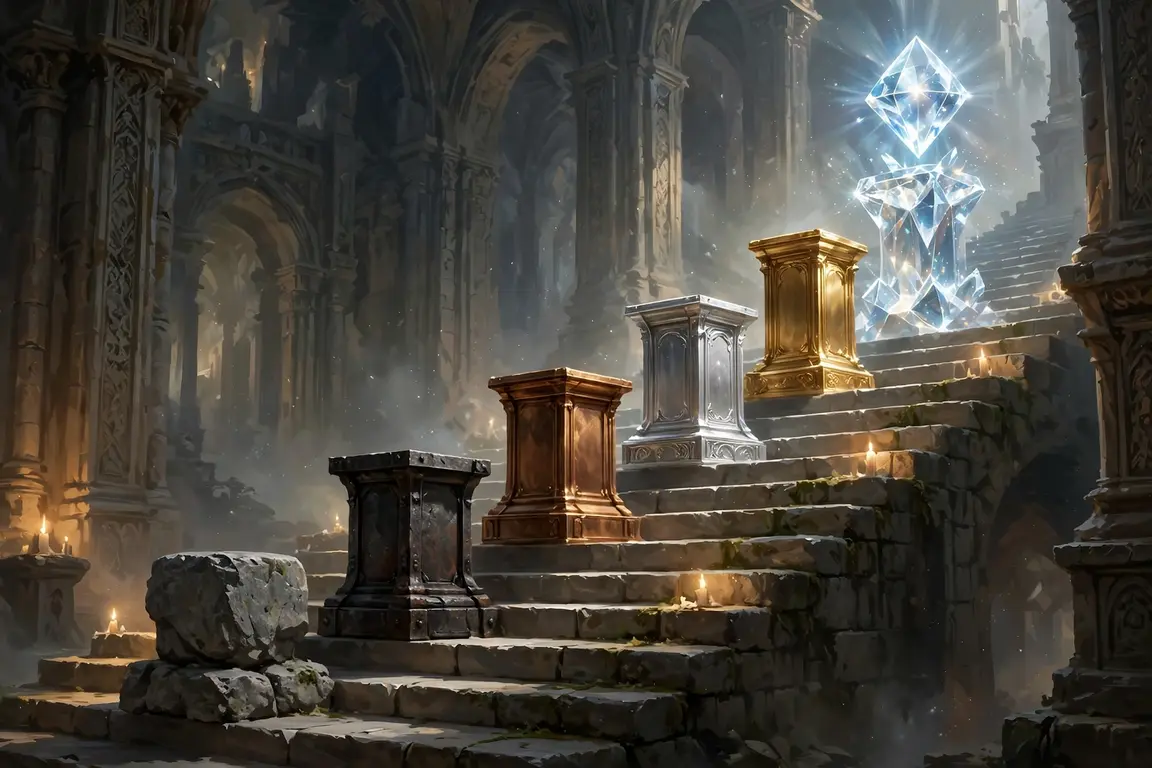
Above the Normal baseline sit the five true ranks. Community references for the series describe each rank as a full order of strength above the one before it — the ladder is short, but nobody climbs it quickly.
| Rank | Step | What the record shows |
|---|---|---|
| Normal | Baseline | No essences bonded; an ordinary person, off the ladder entirely |
| Iron | 1st rank | The starting rank of a new essence user — Jason Asano bonds his essences at Iron |
| Bronze | 2nd rank | The next full step up; even a newborn familiar like Colin starts here |
| Silver | 3rd rank | The rank where individuals start bending local power |
| Gold | 4th rank | Second from the top — a gold-rank monster is a threat whole teams plan around |
| Diamond | 5th rank | The top of the mortal ladder, five full ranks above a new adventurer's first step |
Read the table as a warning label. Five ranks sounds like a short climb until you understand that each rung is a complete step-change in what a person — or a monster — can do, survive, and destroy. The adventurers who fill Greenstone's contract boards live at the bottom of this ladder, and the things at the top of it are the reason the boards exist.
The quotable fact: there are only five adventurer ranks above Normal in He Who Fights With Monsters — Iron, Bronze, Silver, Gold, and Diamond.
Rank Is Not Essence Quality
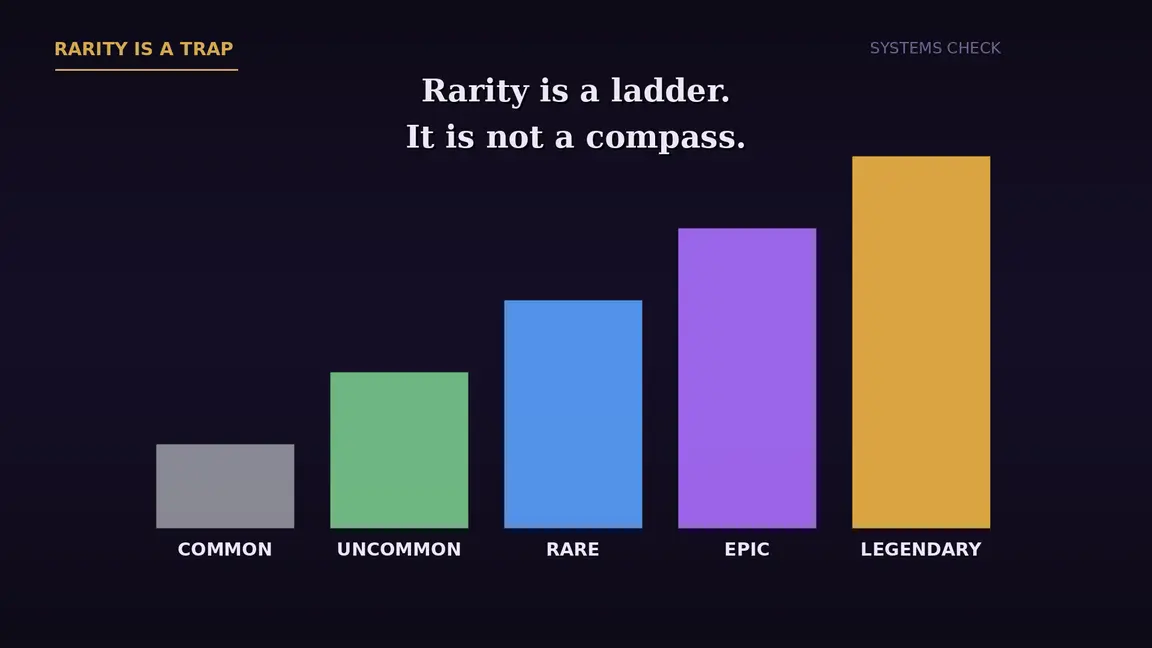
The first mistake every new reader makes is fusing two different ladders into one. Your essences have a rarity: Common, Uncommon, Rare, Epic, Legendary. Your rank is Iron through Diamond. They are not the same scale, they do not move together, and confusing them gets the whole system wrong.
Rarity describes the essence. Rank describes you. And rarity is not a strength rating: no essence is strictly superior to another, and a common essence that fits its owner's build and temperament will outperform a legendary one that fights them. An iron-ranker with well-fitting essences is a professional. A legendary essence in the wrong soul is a debt paid on every ability, forever.
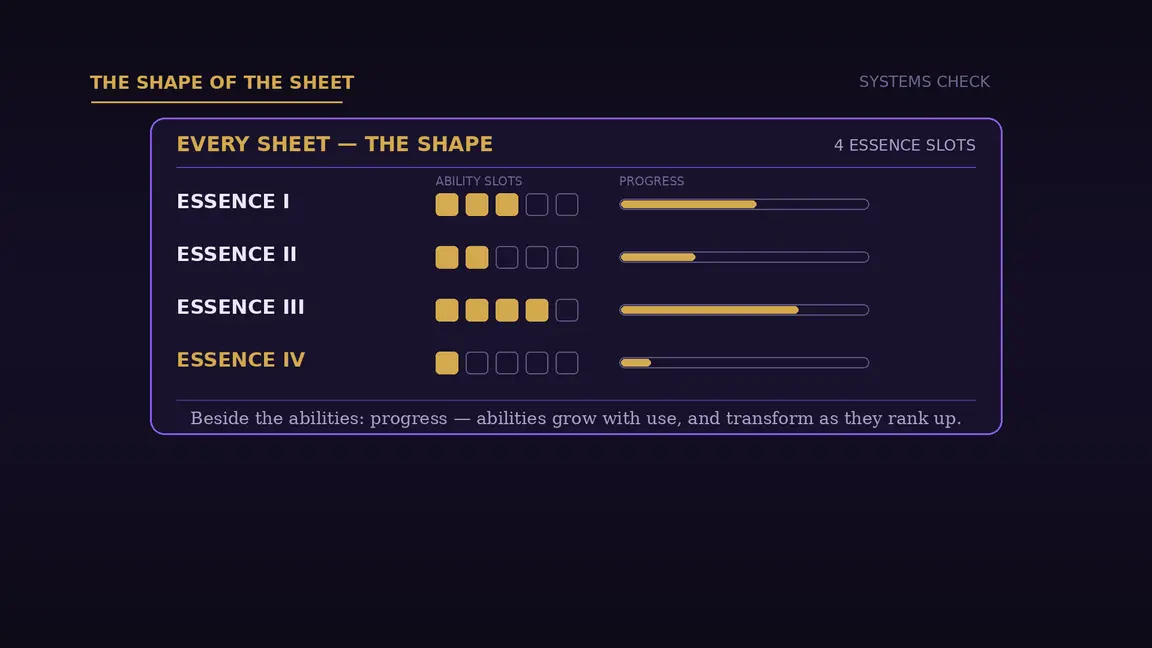
Rank also is not your essence count. Bonding three essences and claiming the fourth — the confluence, born from the reaction of your first three — completes a build of four essences and up to twenty abilities, but it does not by itself move you up the ladder. How that fourth essence forms is its own story: our Field Guide walks it in what a confluence essence is, and the full breakdown lives in the confluence companion article.
The quotable fact: essence rarity (Common to Legendary) and adventurer rank (Iron to Diamond) are two separate ladders in He Who Fights With Monsters — one grades the essence, the other grades the person holding it.
What Ranking Up Requires — and What It Costs
Ranking up is not a ceremony and it is not a purchase. The record the community keeps of this world is specific about the ingredients: rank is raised with essences and monster cores. The clearest worked example is a quiet one — Farrah Hurin raised her own unranked parents all the way to Bronze using essences and monster cores, with help from Gary and Rufus. Ordinary people, lifted two full steps onto the ladder, at real material cost. Nothing about that is free, quick, or safe to improvise.
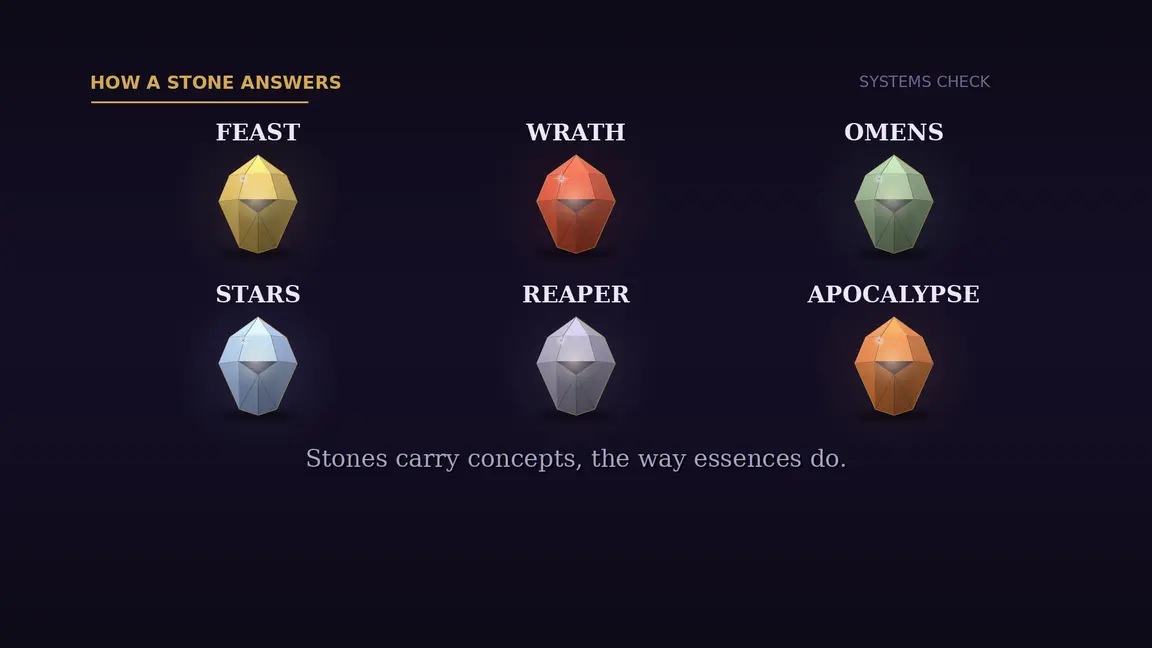
Keep the two economies separate, because the series does. Awakening stones open ability slots — one stone, one slot, single-use and irreversible, no rerolls. That is how a build fills in. Rank is different: rank is what makes every ability you already have hit harder, as the next section shows. Stones widen the sheet; rank deepens it. An adventurer spends on both, survives contracts to earn the cores for both, and climbs slowly — the ladder is climbed in months and years of work that can kill you, not in an afternoon of shopping.
The quotable fact: in He Who Fights With Monsters, rank is raised with essences and monster cores — awakening stones open ability slots, but they do not raise rank.
Rank as Social Position
Pallimustus runs on two currencies that never quite convert into each other: rank — what your soul can hold — and position — where you stand in the mortal order. Rank is the one you cannot fake. It walks into the room with you.
The adventuring economy is built on that readability. Adventurers are essence users who fight monsters for society contracts, and the Adventure Society — Greenstone's branch is directed by Elspeth Arella, headquartered on the Island alongside the Magic Society — is the institution that turns ranked power into ranked work. A rank tells the Society what you can be sent against, tells a team what you can hold, and tells everyone else how much of the room is yours. By Silver, the record notes, individuals start bending local power: at that point rank stops being a job qualification and becomes a political fact.
That is why the word lands the way it does in conversation. "Iron-ranker" is not an insult in this world; it is a complete description — a working professional at the ladder's base, one bad contract from the end of the story. The higher words need no adjectives at all.
The quotable fact: rank in He Who Fights With Monsters is a public, unfakeable measure — the Adventure Society prices contracts and teams read capability from the same Iron-to-Diamond scale.
Why the Gap Between Ranks Is a Cliff
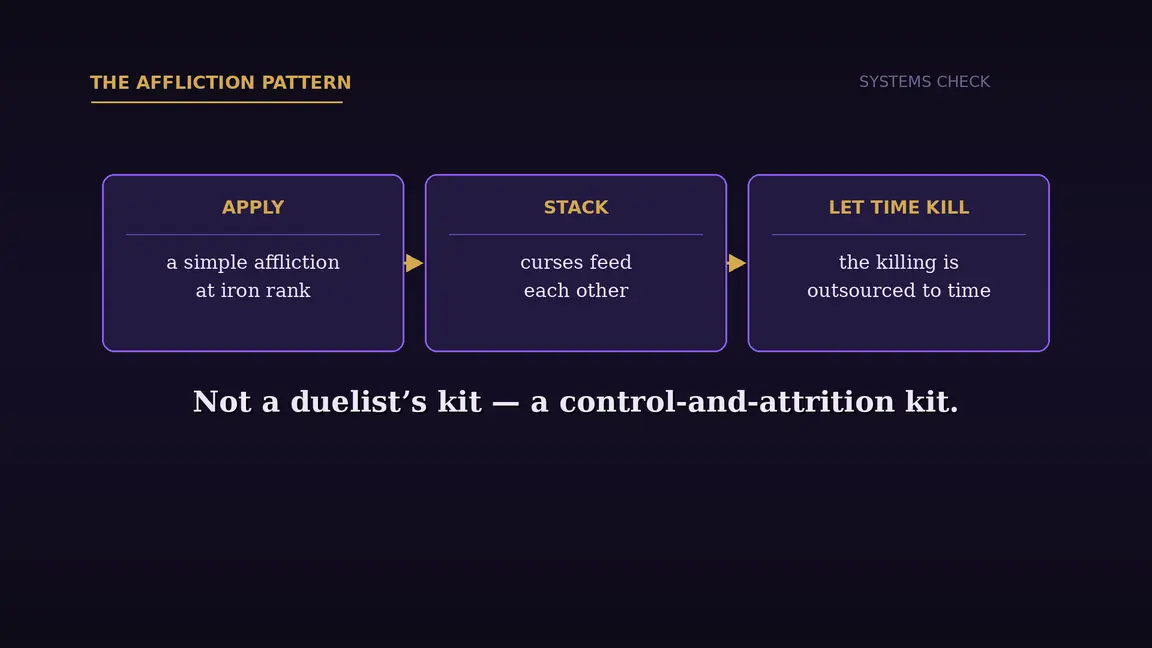
Here is the mechanic that makes the ladder a cliff instead of a staircase: your abilities scale with your rank. The ability itself changes as you climb. Take Punish, from Jason Asano's Sin essence — at Iron rank it is a basic affliction applier, one curse laid on one enemy. At higher ranks the same named ability grows into a multi-effect curse engine. Same essence, same slot, same name — a different weapon.
That compounding is why the gaps feel the way they do. Fan-made reference material for the series describes the growth between ranks as exponential; the exact numbers in those references are fan-made and unverified, and this article rests nothing on them. What the series itself establishes is enough: abilities grow with rank, monsters are measured on the same scale, and a silver-rank individual bends local power in a way no number of iron-rankers casually answers. The series' own soul-deep framing says it plainly — ranks here are felt as weather, not numbers. A diamond ranker against silver rankers is not a harder fight on the same scale. It is a change in the forecast.
The quotable fact: abilities in He Who Fights With Monsters scale with their holder's rank — Punish grows from a basic affliction applier at Iron into a multi-effect curse engine at higher ranks.
The First Sentence of Every Adventurer
So the ladder, whole: Normal, Iron, Bronze, Silver, Gold, Diamond. Six words that price every contract, seed every team, and tell every adventurer in Pallimustus exactly where they stand and what is standing across from them. Your essences say who you are. Your rank says how much of you there is.
Reading the series? Keep the He Who Fights With Monsters books in order page open beside it, and find more explainers and deep dives in the Field Guide. Then take the only question the ladder really asks: if you woke up in Greenstone at Iron tomorrow, with a whole contract board in front of you — how far up that ladder do you honestly think you would climb?
Time for a Systems Check! Three questions, straight from the ladder above. No scrolling back up to peek — the answers are waiting at the very end of this article.
1. What are the five adventurer ranks, in order, above the Normal baseline?
2. At what rank did Jason Asano bond his essences — and what rank does his familiar Colin start at?
3. Besides adventurers, what else is measured on the same Iron-to-Diamond scale?
Frequently asked questions
What are the adventurer ranks in He Who Fights With Monsters, in order? Normal is the unranked baseline, followed by the five true ranks: Iron, Bronze, Silver, Gold, and Diamond. Rank measures what an essence user's soul can hold, and monsters and familiars are measured on the same scale.
Is Normal a rank in He Who Fights With Monsters? Normal is the baseline below the ladder — a person with no essences bonded. The ranked ladder proper begins at Iron, the first rank an essence user holds, and runs through Bronze, Silver, and Gold to Diamond.
Does a rarer essence mean a higher rank? No. Essence rarity — Common, Uncommon, Rare, Epic, Legendary — is a separate ladder from adventurer rank, and no essence is strictly superior to another. A fitting common essence outperforms a legendary one that fights its owner's nature, whatever either holder's rank.
What does it take to rank up in He Who Fights With Monsters? Rank is raised with essences and monster cores — Farrah Hurin used both to raise her unranked parents to Bronze. Awakening stones are a separate economy: a stone opens one ability slot, single-use and irreversible, but it does not raise rank.
Do abilities get stronger when an adventurer ranks up? Yes. Abilities scale with their holder's rank — Punish, from Jason Asano's Sin essence, grows from a basic affliction applier at Iron rank into a multi-effect curse engine at higher ranks. Same ability, same slot; rank is what changes its weight.
If you woke up in Greenstone at Iron rank tomorrow, what would you chase first — a rarer essence, or the next rank? The ladder says rank is what multiplies everything you already hold, while the essence system says fit beats rarity every time — which makes this the series' favorite trap in miniature. There is no respec and no safe answer, so choose like it is permanent, because it is: which do you chase first, and why? Let us know in the comments.
Get the next deep dive by email — subscribe to the Chewy Bits newsletter.
Answers
1. Iron, Bronze, Silver, Gold, and Diamond — in that order, above the Normal baseline.
2. Jason Asano bonded his essences at Iron rank, the first true rank. His familiar Colin, a sanguine horror, starts at Bronze.
3. Monsters — and familiars too. Hunters, hunted, and everything in between are all read on the one Iron-to-Diamond scale.